
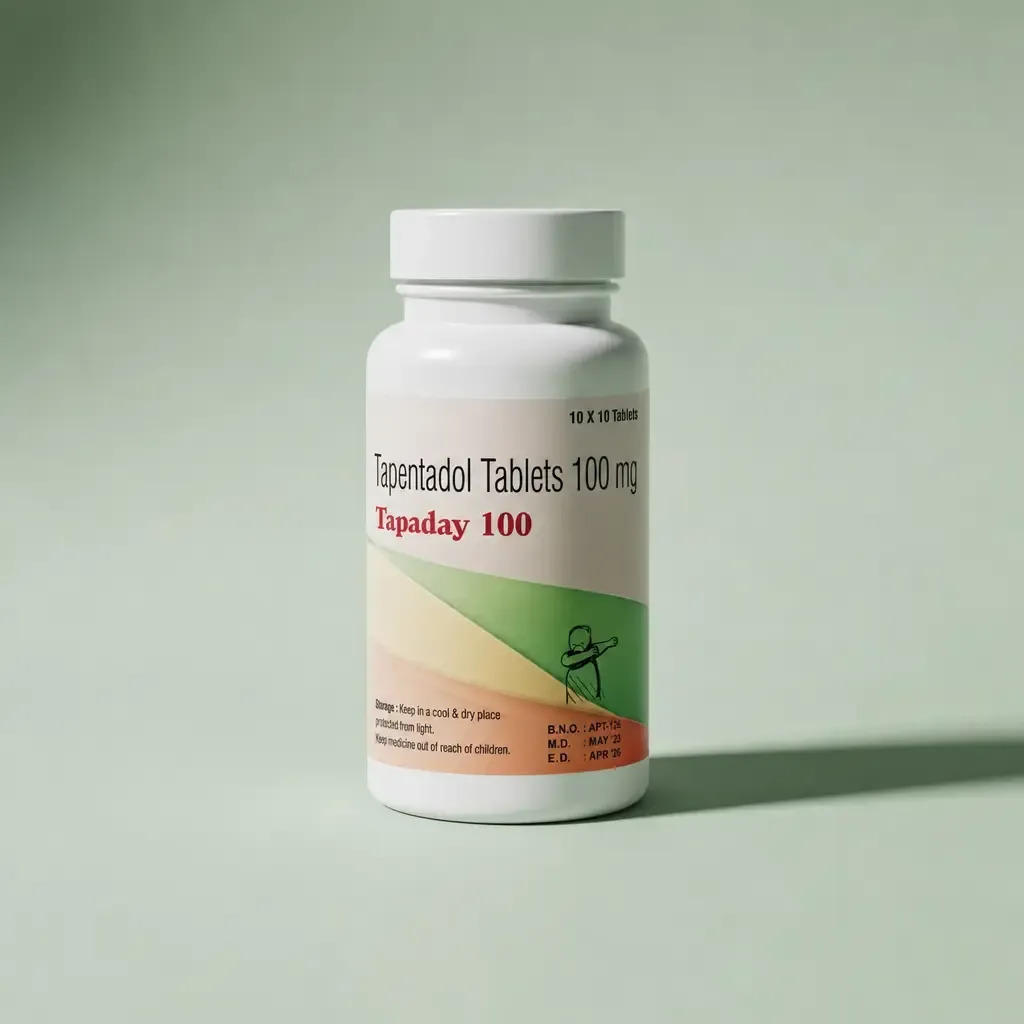
Tapentadol (Tapaday)
Select Dosage / Strength
Select Pack Size
Verified Quality
100% Authentic Meds
Discreet Delivery
Plain packaging guaranteed
Secure Payment
Encrypted transactions
24/7 Support
Customer care assistance
Tapentadol: Uses, Strengths, & Comparisons
What Is Tapentadol?
Tapentadol is a prescription pain medicine. Doctors use it when pain is strong enough that milder painkillers haven’t done the job. It belongs to the opioid class, which means it is a controlled medicine and only a licensed doctor can prescribe it.
It is not a first-line treatment. Most doctors will try paracetamol, anti-inflammatory tablets or physiotherapy first. Tapentadol comes into the picture when the pain is moderate to severe, or when it has lasted long enough that daily life is affected.
How Does Tapentadol Work?
Tapentadol does two things at once, and that is what sets it apart.
First, it attaches to mu-opioid receptors in the brain and spinal cord. These receptors help control how the body registers pain. When tapentadol binds to them, the pain signal gets weaker by the time it reaches the brain.
Second, it stops nerve cells from taking back up a chemical called noradrenaline. With more noradrenaline around, the body’s own pain-dampening pathway works better. This second action is why tapentadol is often discussed for nerve-related pain, not just injury pain.
Is Tapentadol a Generic Medicine or a Brand Name?
It is both. Tapentadol is the generic name, meaning the active ingredient. Brand names are what you see on the pack.
In the United States the best-known brand is Nucynta. In the UK and parts of Europe it is sold as Palexia. In India you will come across names like Tapaday. The ingredient is the same, but the strengths available and the exact formulation can differ by brand and by country, so always go by what your doctor wrote on the prescription.
Immediate-Release vs. Extended-Release Tapentadol
Tapentadol comes in two forms, and they are used for different situations.
Immediate-release (IR) tablets start working fairly quickly and wear off in a few hours. They are usually prescribed for short-term pain, like pain after surgery or an injury. Doses are taken several times a day.
Extended-release (ER or prolonged-release) tablets release the medicine slowly over about 12 hours. They are meant for ongoing pain that needs steady cover through the day and night. These tablets must be swallowed whole. Crushing, chewing or splitting them releases the full dose at once, which is dangerous.
What Is Tapentadol Used For?
Tapentadol is prescribed for moderate to severe pain. How it is used depends a lot on whether the pain is short-lived or long-term.
Tapentadol for Acute Pain
Acute pain is sudden and usually has a clear cause: a fracture, a surgery, a dental procedure, a serious sprain. For this, doctors typically prescribe the immediate-release form for a short period. The goal is to get you through the worst days and then stop, or step down to something milder.
Tapentadol for Chronic Pain
Chronic pain lasts for weeks or months. Think of long-standing back pain, severe arthritis pain or pain from conditions that don’t fully go away. The extended-release form is used here, taken on a fixed schedule. Because long-term opioid use carries real risks, doctors usually review these prescriptions regularly and ask whether the benefit still outweighs the downside.
Tapentadol for Nerve Pain
Nerve pain feels different from ordinary pain. People describe it as burning, tingling, shooting or like an electric shock. Because tapentadol also works on noradrenaline, it has been studied for nerve pain. In the US, the extended-release version is approved for pain from diabetic peripheral neuropathy, which is nerve damage in the feet and legs linked to diabetes. Whether it is the right choice for other types of nerve pain is something only your doctor can decide.
Tapentadol 100 mg
What Is Tapentadol 100 mg Used For?
Tapentadol 100 mg is a mid-to-higher strength tablet. In immediate-release form, doctors may prescribe it for moderate to severe short-term pain when lower strengths haven’t been enough. In extended-release form, 100 mg is a common dose for people who need round-the-clock cover for long-lasting pain.
No one should pick a strength on their own. The right dose depends on your pain, your age, your kidney and liver health, and whether you have taken opioids before. Doctors usually begin with a lower dose and adjust.
How Long Does Tapentadol 100 mg Take to Work?
With immediate-release tablets, most people start to feel relief within 30 to 60 minutes, and the effect usually lasts around four to six hours. Extended-release tablets work more slowly by design. They build up steadily and are meant to hold pain down across the day rather than give a quick hit. Taking an extra tablet because relief feels slow is a common and risky mistake. If the pain isn’t controlled, call your doctor instead of adjusting the dose yourself.
Who Should Be Careful With Tapentadol 100 mg?
Some people need extra caution or shouldn’t take tapentadol at all. This includes people with severe breathing problems or asthma, anyone with a blocked or narrowed gut, people who have taken an MAO inhibitor (a type of antidepressant) in the last 14 days, and people with a history of seizures, head injury, or alcohol or drug misuse. Tell your doctor about your full medical history before starting. Common side effects include nausea, dizziness, drowsiness, constipation and headache. Don’t drive or operate machinery until you know how it affects you.
Tapentadol 200 mg
What Is Tapentadol 200 mg?
Tapentadol 200 mg is a higher-strength tablet. In most places it is sold only as an extended-release tablet, not as an immediate-release one. It is meant for people with long-term, severe pain who already take opioids regularly and have been assessed by a doctor.
It is not a starting dose. Someone new to opioids should never begin at this level.
How Does Tapentadol 200 mg Differ From Lower Strengths?
The medicine is the same. The difference is how much of it goes into your body with each tablet. A higher strength means a stronger effect, but it also means a higher chance of side effects such as drowsiness, slowed breathing and constipation.
Lower strengths, like 50 mg or 100 mg, are used to start treatment and find the lowest dose that works. The 200 mg tablet is typically reached only after a doctor has built up the dose step by step and seen how the person responds. Daily limits also apply, and they are lower for extended-release tablets than many people expect, so the total across the day always matters.
Tapentadol vs. Other Pain Medicines
Tapentadol vs. Tramadol
Both are opioid painkillers, and both also affect brain chemicals beyond the opioid receptor. Tramadol acts on serotonin and noradrenaline. Tapentadol acts mainly on noradrenaline. That means tapentadol carries a lower risk of serotonin-related problems, though it is not free of interaction risks. Tapentadol is generally considered the stronger of the two for the same dose range. Tramadol has a known seizure risk, and tapentadol carries it too, but studies suggest the stomach side effects such as nausea and constipation may be milder with tapentadol.
Tapentadol vs. Oxycodone
Oxycodone is a classic strong opioid that works almost entirely through the opioid receptor. Tapentadol’s second action on noradrenaline gives it a different profile. Clinical studies have found similar pain relief with fewer stomach complaints, like constipation and vomiting, in some patients. Both are controlled medicines with serious risks of dependence, and neither is “safer” in the sense of being low-risk. The choice depends on the person and the type of pain.
Tapentadol vs. Other Opioid Pain Medicines
Morphine, codeine, hydrocodone, fentanyl and others all treat pain through the same main route. They differ in strength, how long they last, and how they are broken down by the body. Codeine is milder and used for less severe pain. Morphine and fentanyl are used for very severe pain, often in hospital or cancer care. Tapentadol sits somewhere in the middle, with its own mix of effects. A doctor chooses based on the pain, your other conditions and the medicines you already take.
Tapentadol vs. Non-Opioid Pain Relievers
Paracetamol, ibuprofen, diclofenac and naproxen don’t act on opioid receptors. They are the usual first step because they carry no risk of opioid dependence and are suitable for many types of pain. Their limit is that they may not be enough for severe pain. Nerve-pain medicines such as gabapentin, pregabalin and duloxetine are another non-opioid route, and many doctors try them before turning to tapentadol for nerve pain. Tapentadol is usually kept for when these options haven’t worked or aren’t suitable.
Frequently Asked Questions About Tapentadol 200 Mg
Is Tapentadol the Same as Tapaday?
Tapaday is a brand name for tapentadol sold in India. The active ingredient is tapentadol. If you see a different brand name on a pack, check the label for the ingredient and strength, and ask your pharmacist if you are unsure.
Is Tapentadol an Opioid?
Yes. It is a centrally acting opioid analgesic, and it is a controlled substance in many countries. It also has a second, non-opioid action on noradrenaline, but that doesn’t change its classification or the precautions that come with it.
How Long Does Tapentadol Last?
Immediate-release tablets usually last about four to six hours. Extended-release tablets are designed to last around 12 hours, which is why they are taken twice a day. How long it works for you can vary with your body, your dose and your other medicines.
Can Tapentadol Cause Dependence or Addiction?
Yes. Like other opioids, tapentadol can cause physical dependence, and some people develop addiction. The risk is higher with higher doses, longer use, a personal or family history of substance misuse, and mental health conditions. Stopping suddenly after regular use can cause withdrawal, including restlessness, sweating, anxiety, stomach upset and trouble sleeping. If you have been taking it for a while, your doctor should guide you through reducing it slowly. If you feel you can’t control your use, speak to your doctor early.
Can Tapentadol Be Taken With Other Medicines?
Some combinations are dangerous. Alcohol, sleeping tablets, benzodiazepines (like diazepam or alprazolam), other opioids and certain muscle relaxants can slow breathing and cause deep drowsiness when mixed with tapentadol. MAO inhibitors must not be used with it. Some antidepressants and migraine medicines can also interact. Always give your doctor and pharmacist a full list of everything you take, including herbal products and over-the-counter tablets.
Medical Disclaimer
This article is for general information only. It is not medical advice and does not replace a consultation with a qualified healthcare professional. Tapentadol is a prescription-only controlled medicine. Never start, stop or change your dose without your doctor’s guidance. If you experience severe drowsiness, slow or shallow breathing, confusion or an allergic reaction, seek emergency medical help right away.
Key Features & Benefits
- Provides effective therapeutic relief and supports health recovery under standard clinical guidelines.